
This past summer, our yard hosted Ground Yellowjackets in the front yard and Umbrella Wasps near the back door. The nest locations were a little inconvenient.
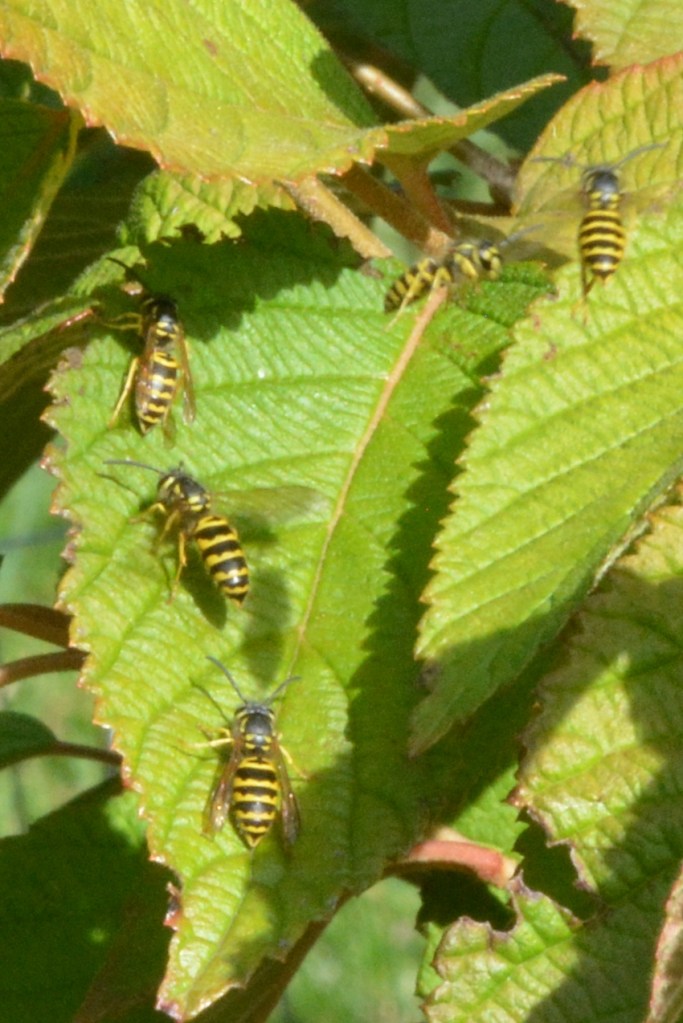
One mid-morning this summer I was weeding by the viburnum in the front yard and found the air filling with yellow and black insects. I backed away slowly. After a few hours, when they were visible but not agitated, I slowly and quietly returned to retrieve my garden tools and camera, and saw I’d been working inches from the Yellowjackets’ ground nest. I ceded the area to them for the rest of the summer.
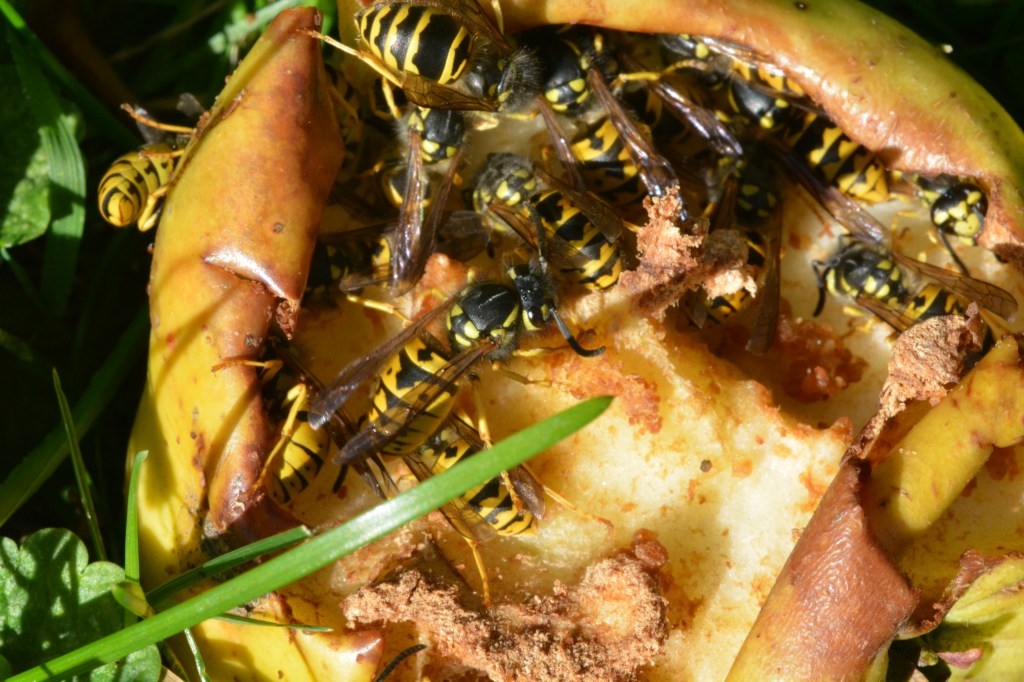
With the help of iNaturalist and Bugguide.net, I identified them as Vespula maculifrons, a Ground Yellowjacket also known as the Eastern Yellowjacket. According to Bugguide, they are the most abundant Yellowjacket species east of the Great Plains. The adults feed on nectar and the juice of ripe and rotting fruit. As it happens, I first identified this species years ago when I rented a house with a big apple tree in the backyard and couldn’t keep up with the fallen apples. Yellowjackets of several species appreciated the bounty, including Vespula germanica, the German Yellowjacket, just left of center in this photo.
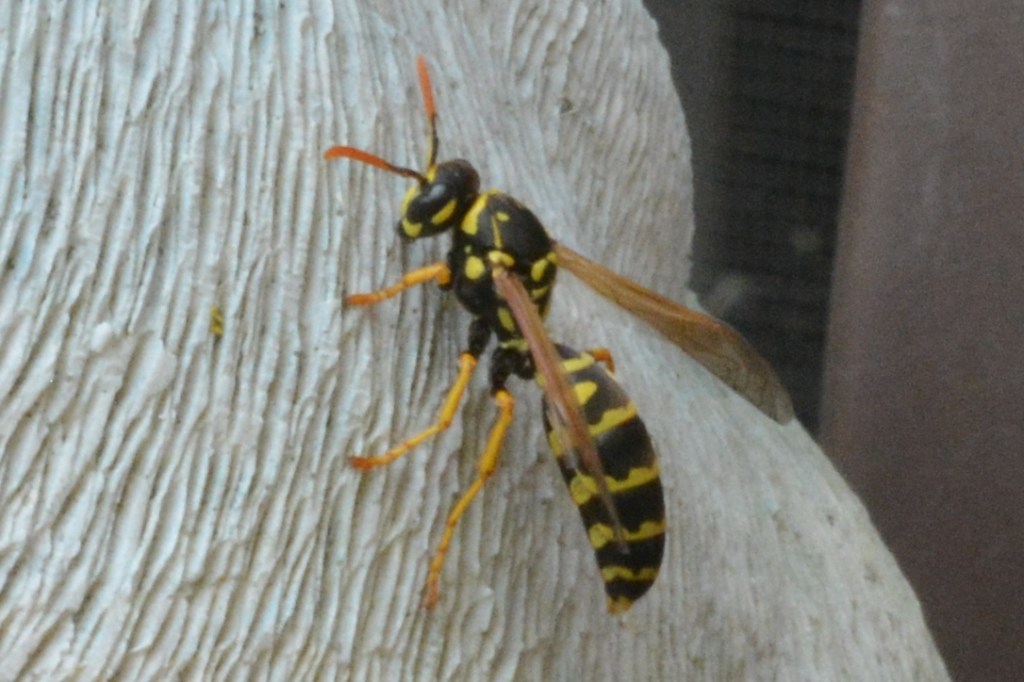
Meanwhile, in the backyard, wasps nested, European Paper Wasps, Polistes dominula. Oddly enough, in a bluebird-shaped birdhouse that I’d left on the back deck.

I’ve been familiar with Paper Wasp nests under eaves, but this hidden-cavity nesting is new to me; according to information on Bugguide.net, cavity nesting in wasps is species-specific. Paper wasps in general are less territorial about their nests than Yellowjackets, and they didn’t do anything startling, but I didn’t linger on the deck once they’d taken up residence.
I waited till after a deep frost to bring the birdhouse inside to try to get a photo of the nest. It was tucked up on the right side of the “ceiling.” Note the empty cells.

The members of the genus Polistes are also known as Umbrella Paper Wasps, a name I find charming without knowing why. Polistes means “founder of a city,” although since it is a fertilized female, a queen, who selects the site, builds the nest, and establishes the colony, you’ll see writers refer to the “foundress of the city.”
These flyers with their vibrant orange antennae, (a key identifier for Polistes dominula, by the way), were interesting company this summer – once, when I inadvertently moved the birdhouse a few inches, they couldn’t find the opening even though they flew directly over it. It took a couple of tries for me to get the birdhouse back to where they could find their way in. When I set up my tripod to try to get better photos, I captured this behavior:


Here in northern New York, November has been cold and, with the exception of the new queens, this year’s colonies will have died off. The new queens have left the nest and are overwintering somewhere, maybe in leaf litter, or logs, or soil. But what about next summer? It’s impossible to predict exactly where those queens will choose to start their colonies.
Even though I could, I wouldn’t do anything to discourage the Eastern Yellowjackets. I’m in the habit of leaving areas of bare ground for the ground dwelling bees, and if the wasps take advantage of them, that’s fine. I wasn’t stung or even harassed by these insects, despite them being disturbed by my pulling weeds inches from their nest entrance. The next day when I went out to photograph them, they were already out and flying; I kept my distance and they ignored me.
But one summer of close observation of wasps on my back deck was enough: I don’t think the wasps would use the birdhouse again, but I’ll move it to the wooded area behind the house where anyone, from mice to bluebirds to wasps, will be welcome to it.
Wasp-watching is done for the year and the process of going through photos I haven’t had a chance to review is underway. And, reading and researching continues on, of course. Here are two books I’m pretty excited about, with Bookshop links:
Jill McDonald’s Exploring Insects, a book for children, is a beautiful introduction to the world of insects and critters we mistake for insects. The illustrations are attractive, McDonald uses simple language to define well-selected vocabulary, and each page offers a question that invites reflection and encourages curiosity and conversation.
Eric R. Eaton’s Wasps, The Astonishing Diversity of a Misunderstood Insect, is itself astonishing. The illustrations and photographs are worth the price of admission. I hadn’t seen this book when I ordered it through Bookshop, and I’m really struck by its quality. If you know anyone who likes wasps, you know someone who will love this book.




 The quarry man bought the old house and its acreage, scraped the topsoil off the meadow, and sold off the house with two acres of the meadow and its partial border of trees and shrub. In the house, a bathroom went in, and in a child’s room, a fat rainbow – floor to ceiling to floor – was sketched out and painted.


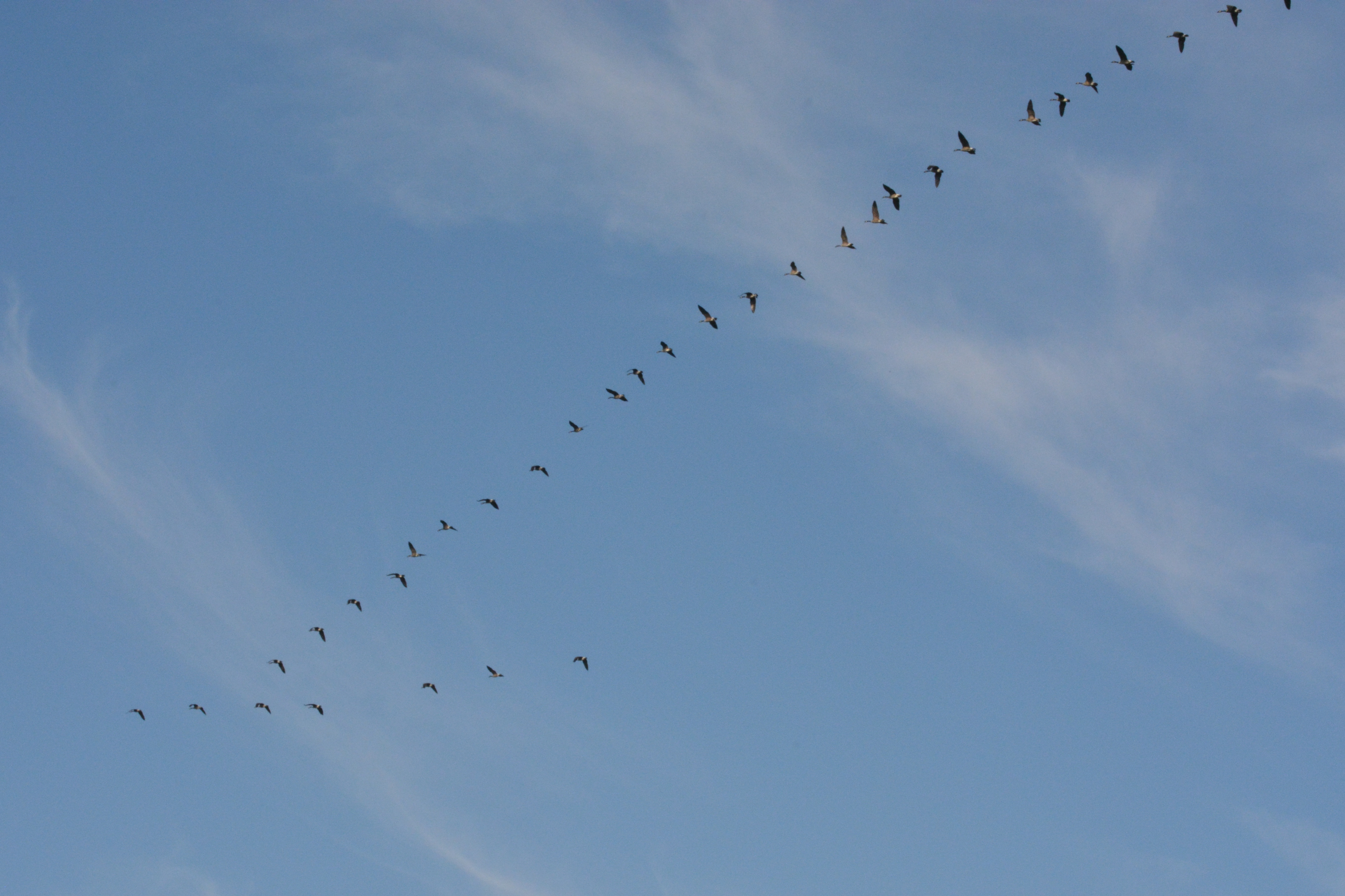 They have shifted into travelers; their calls have become what they become each fall for those they leave behind – the final, genuine, farewell to late summer, the earliest of the signs that will, in sum, lead us to what we will slowly, slowly come to accept: fall is taking its place in the rotation of seasons; winter will follow.
 It is a hazy morning, with heavy, indistinct clouds as far as I can see, but I expect that will burn off to another splendid August day. The Chinese calendar has five seasons: Fall, Winter, Spring, Early Summer, and Late Summer. This summer, in particular, I can see the wisdom in that. These August days are nothing like the days of late June and early July. We have shifted to a calmer time, a moment in the year to appreciate the deep glory of late summer.
 Eudora Watson