 The quarry man bought the old house and its acreage, scraped the topsoil off the meadow, and sold off the house with two acres of the meadow and its partial border of trees and shrub. In the house, a bathroom went in, and in a child’s room, a fat rainbow – floor to ceiling to floor – was sketched out and painted.
For thirty years, owners kept the meadow mowed. Between mowings, grasses grew, and golden rod, oyster plants, milkweed, and asters. Each late fall the meadow’s summer growth lay itself down, and in that flattened landscape the old disc harrow, stranded in its long-gone farmer’s field, reappeared.
Twenty years ago the clothes line, built with sturdy wooden posts and cross beams, stood on the far side of the cedar tree. Now its northern post is engulfed in branches. The outhouse, still visible in its pile of moldered lumber when I arrived, has long since joined the remains of the wildflowers that grew up between the boards, fell over, and decomposed. It is almost twelve years since the meadow was cut, and it is only in the last two that wild cherry bushes have spread from individuals to patches of isolated mini-woodlands that shelter bird and spider nurseries.
Each winter I cover the rain barrels and shovel the long driveway; each spring I listen for the voice of the wood frog and try to avoid the black flies’ bite. Every other summer or so I get to the task of clearing the meadow, cutting all the box elders’ sprouts to the ground. In the fall I greet the disc harrow and Orion on their return to my view, and wonder which Turkey Vulture sighting will be my last of the year.
Eventually, I will leave this place. The meadow will give way to box elder trees, or not. As I sleep beneath the child’s rainbow, my window open to the night, what is sure for me is the Little Dipper, pinned at its tail by the North Star, circling overhead. What is almost as sure is the topsoil, building. Slowly, slowly.




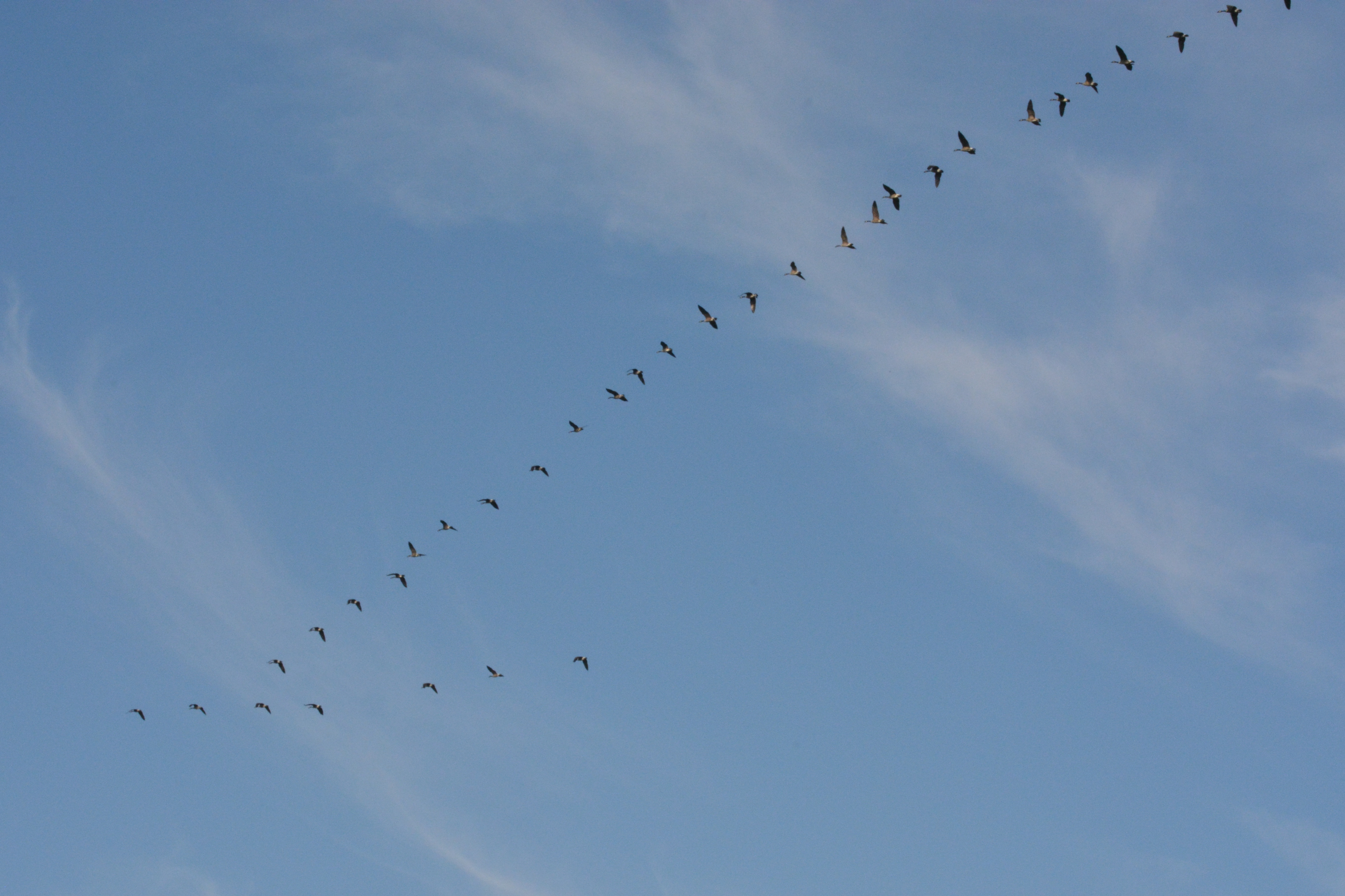 They have shifted into travelers; their calls have become what they become each fall for those they leave behind – the final, genuine, farewell to late summer, the earliest of the signs that will, in sum, lead us to what we will slowly, slowly come to accept: fall is taking its place in the rotation of seasons; winter will follow.
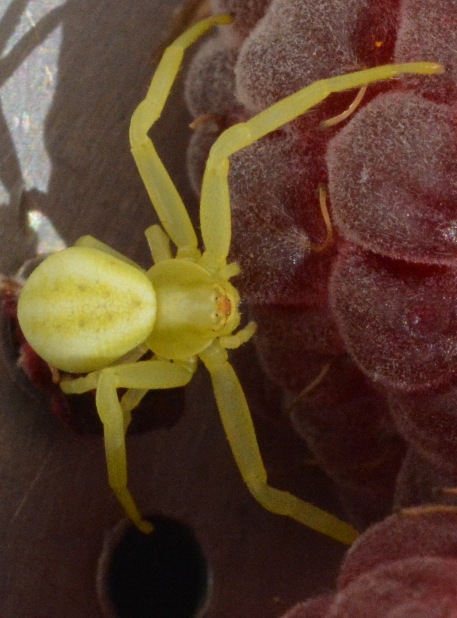
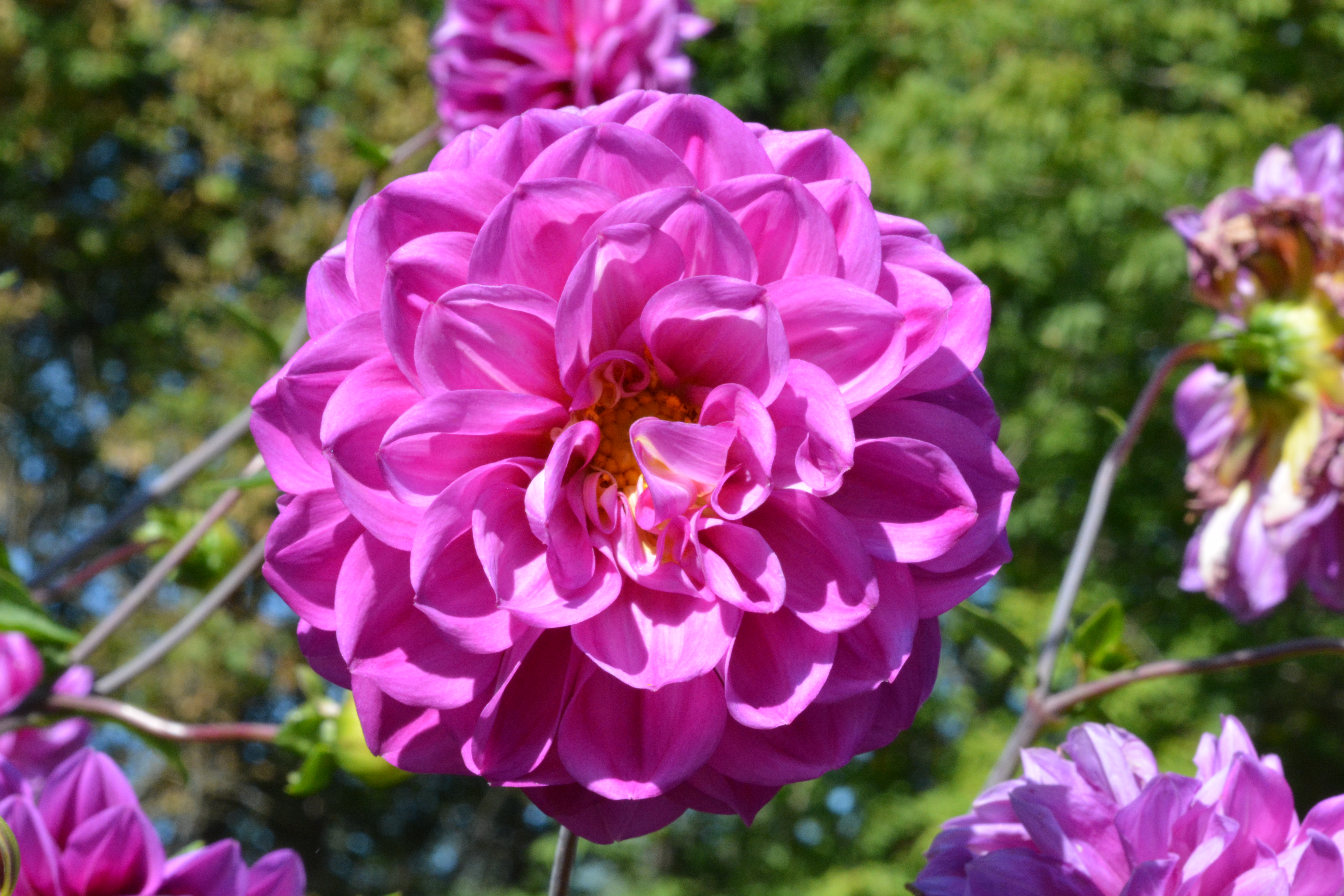 At a local fund-raising event this summer, people lined up with their dogs in the parking lot outside the sports arena for a communal walk. Inside the arena, local craft folks and fund-raising tables were set up. From one long table of plants I selected three dahlia tubers from their cardboard box. They were, as is the way of dahlias, contorted beings that held no outwardly sign of what will come. Planted, the dahlias grew to over five feet in height. There, they unfurled blossom upon blossom. I will return their gift and dig them up to shelter them for another season.
 It is a hazy morning, with heavy, indistinct clouds as far as I can see, but I expect that will burn off to another splendid August day. The Chinese calendar has five seasons: Fall, Winter, Spring, Early Summer, and Late Summer. This summer, in particular, I can see the wisdom in that. These August days are nothing like the days of late June and early July. We have shifted to a calmer time, a moment in the year to appreciate the deep glory of late summer.
 Eudora Watson