Yellowjackets and Umbrellas

European Paper Wasps

This past summer, our yard hosted Ground Yellowjackets in the front yard and Umbrella Wasps near the back door. The nest locations were a little inconvenient.
Eastern Yellowjacket and Viburnam

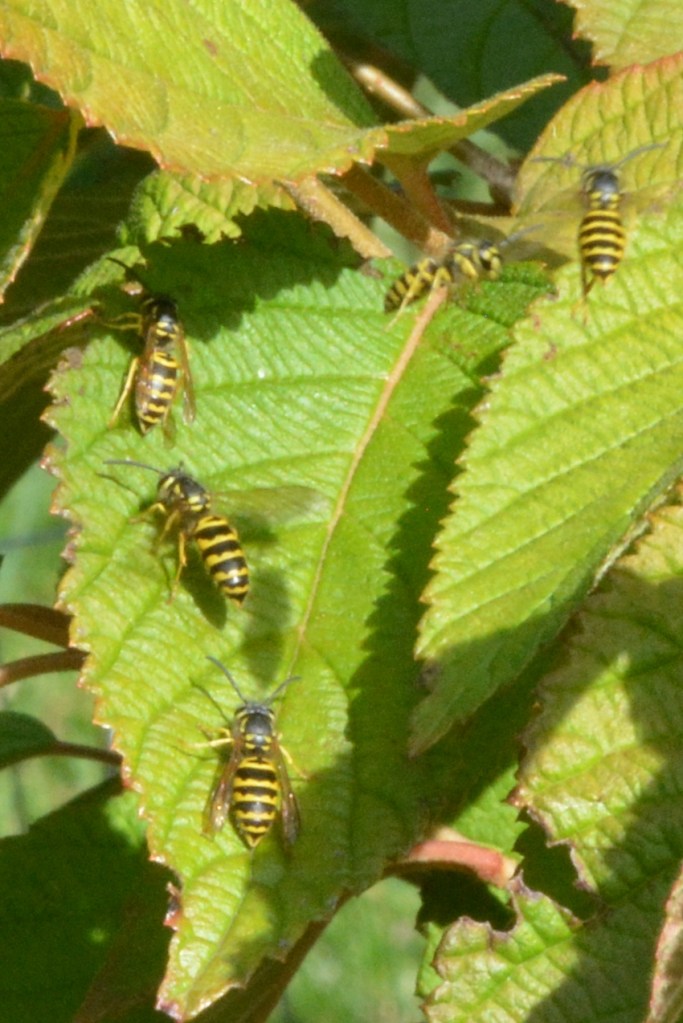
One mid-morning this summer I was weeding by the viburnum in the front yard and found the air filling with yellow and black insects. I backed away slowly. After a few hours, when they were visible but not agitated, I slowly and quietly returned to retrieve my garden tools and camera, and saw I’d been working inches from the Yellowjackets’ ground nest. I ceded the area to them for the rest of the summer.

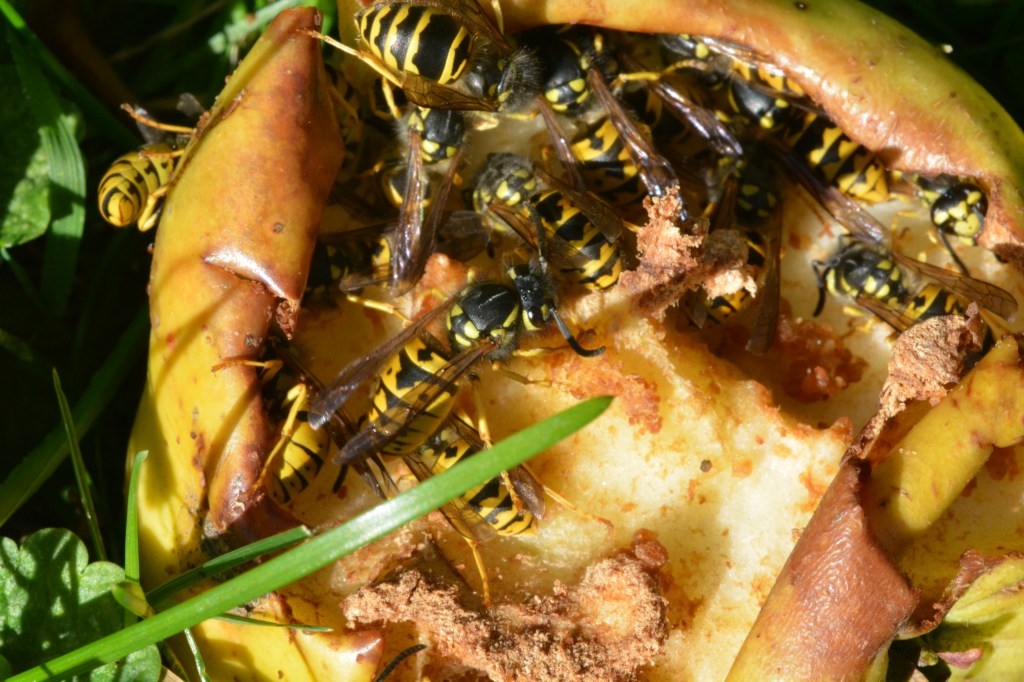
With the help of iNaturalist and Bugguide.net, I identified them as Vespula maculifrons, a Ground Yellowjacket also known as the Eastern Yellowjacket. According to Bugguide, they are the most abundant Yellowjacket species east of the Great Plains. The adults feed on nectar and the juice of ripe and rotting fruit. As it happens, I first identified this species years ago when I rented a house with a big apple tree in the backyard and couldn’t keep up with the fallen apples. Yellowjackets of several species appreciated the bounty, including Vespula germanica, the German Yellowjacket, just left of center in this photo.
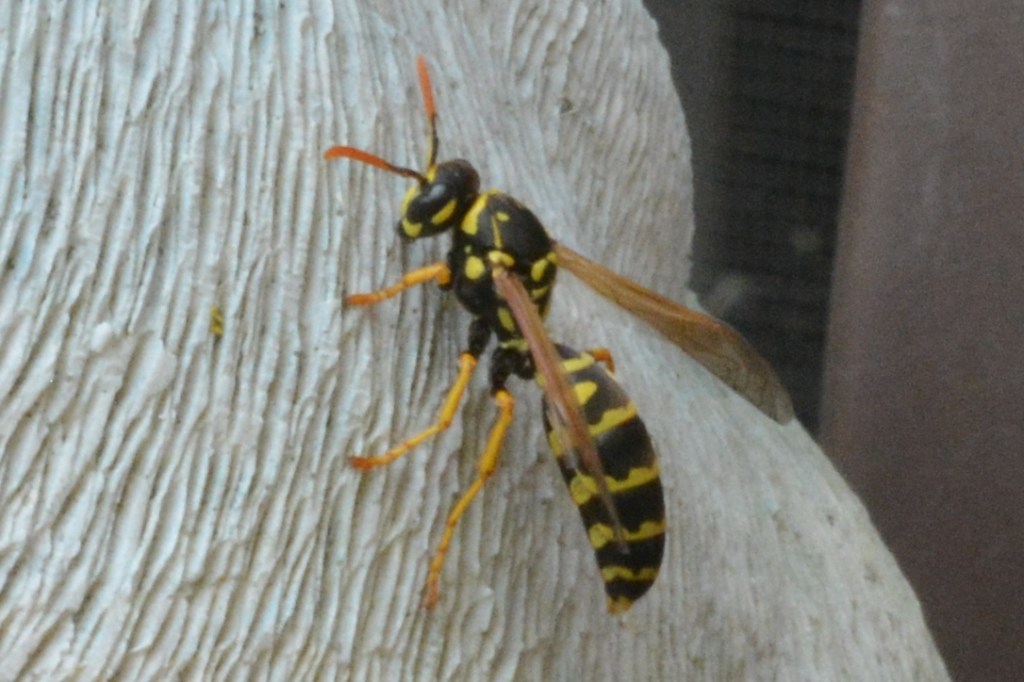
Meanwhile, in the backyard, wasps nested, European Paper Wasps, Polistes dominula. Oddly enough, in a bluebird-shaped birdhouse that I’d left on the back deck.

I’ve been familiar with Paper Wasp nests under eaves, but this hidden-cavity nesting is new to me; according to information on Bugguide.net, cavity nesting in wasps is species-specific. Paper wasps in general are less territorial about their nests than Yellowjackets, and they didn’t do anything startling, but I didn’t linger on the deck once they’d taken up residence.

I waited till after a deep frost to bring the birdhouse inside to try to get a photo of the nest. It was tucked up on the right side of the “ceiling.” Note the empty cells.

The cavity nest of Polistes dominula

The members of the genus Polistes are also known as Umbrella Paper Wasps, a name I find charming without knowing why. Polistes means “founder of a city,” although since it is a fertilized female, a queen, who selects the site, builds the nest, and establishes the colony, you’ll see writers refer to the “foundress of the city.”

These flyers with their vibrant orange antennae, (a key identifier for Polistes dominula, by the way), were interesting company this summer – once, when I inadvertently moved the birdhouse a few inches, they couldn’t find the opening even though they flew directly over it. It took a couple of tries for me to get the birdhouse back to where they could find their way in.  When I set up my tripod to try to get better photos, I captured this behavior:

The yellow-faced male coming in for a landing.
The curly antennae are another distinguishing feature of the male.
It’s easy to see why these wasps can be mistaken for Yellowjackets.

Here in northern New York, November has been cold and, with the exception of the new queens, this year’s colonies will have died off. The new queens have left the nest and are overwintering somewhere, maybe in leaf litter, or logs, or soil. But what about next summer? It’s impossible to predict exactly where those queens will choose to start their colonies.

Even though I could, I wouldn’t do anything to discourage the Eastern Yellowjackets. I’m in the habit of leaving areas of bare ground for the ground dwelling bees, and if the wasps take advantage of them, that’s fine. I wasn’t stung or even harassed by these insects, despite them being disturbed by my pulling weeds inches from their nest entrance.  The next day when I went out to photograph them, they were already out and flying; I kept my distance and they ignored me.

But one summer of close observation of wasps on my back deck was enough: I don’t think the wasps would use the birdhouse again, but I’ll move it to the wooded area behind the house where anyone, from mice to bluebirds to wasps, will be welcome to it.

Wasp-watching is done for the year and the process of going through photos I haven’t had a chance to review is underway. And, reading and researching continues on, of course. Here are two books I’m pretty excited about, with Bookshop links:

Jill McDonald’s Exploring Insects, a book for children, is a beautiful introduction to the world of insects and critters we mistake for insects. The illustrations are attractive, McDonald uses simple language to define well-selected vocabulary, and each page offers a question that invites reflection and encourages curiosity and conversation.

Eric R. Eaton’s Wasps, The Astonishing Diversity of a Misunderstood Insect, is itself astonishing. The illustrations and photographs are worth the price of admission. I hadn’t seen this book when I ordered it through Bookshop, and I’m really struck by its quality. If you know anyone who likes wasps, you know someone who will love this book.
Coming soon! (Or, now, that was fun!)

When I began my blog, it was heavily weighted on insects and the natural world. As I began to be more involved at the local animal shelter, the blog reflected that shift. I’ve recently stepped back from training shelter dogs and have carved out more time for writing, and for photographing and identifying the insects and spiders in my backyard. Of course, I still love dogs and will always treasure them in my life, but I’m glad to have renewed my focus on writing and on the world of bugs.

One result of that renewal is that on October 1, 2025, 6:00 PM – 7:30 PM, I’ll be offering a presentation at the St. Lawrence County Cornell Cooperative Extension Farm in Canton, New York, to share what I’ve learned over more then ten years photographing and identifying insects in whatever place was my backyard at the moment. From three country acres in Canton, NY to a little apartment in the village of Potsdam, to a small house in Canton, and then finally back to a house in the village of Potsdam where I’ve lived since July 2020, I’ve been documenting the insects I find in my yard. With over a hundred species and counting, I have a wealth of photos to share and hints to offer. This project has enriched my life and I’m eager to meet folks who share my interest in backyard critters. For more information about the presentation, here’s a link: Hello, Insects! Field notes from a local backyard

It has been an incredible summer in my backyard, with Thistle proving to be a big hit with many species.

For several days, a Black Swallowtail, Papilio polyxene, visited the Thistle at the side of the house. The Thistle was a favorite of many species, but none more striking than this butterfly.

On the Path to Learning about Wild Bees

I’ve been interested in insects for a long time. As a kid I worried over the ladybugs in the attic and whether they’d survive the winter up there. I rescued as many bugs as I could from the surface of our swimming pool. I dropped crumbs for ants and watched them investigate and haul away the treasure. But it wasn’t until years later, when I took a photo of a beetle that was stranded at the bottom of an empty water glass, that I began to get hooked on figuring out exactly what I was looking at. I had some insect guides on hand – more because I love guidebooks than because I loved insects, I admit – and took a look.

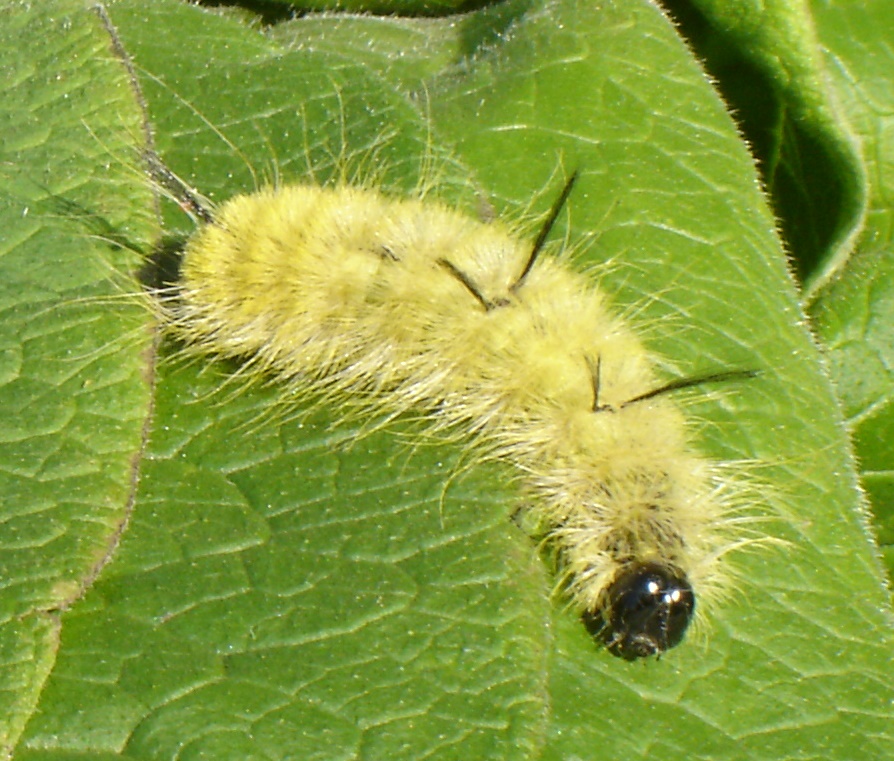
I discovered that what was circling the bottom of the glass was an America Carrion beetle, Necrophila americana. These beetles actually bury the small carcasses they come across for food for their offspring. When I paired the attractive beetle with its name and its burial and parental skills, I was hooked. I bought more guides and worked along on IDs in an entirely haphazard way. But in 2013, I discovered the Iowa State University site, BugGuide.Net. and posted my first photo to their ID Request page. That first posting of a caterpillar, the Dagger Moth Acronicta americana, looks pretty humble, but it was exciting for me.

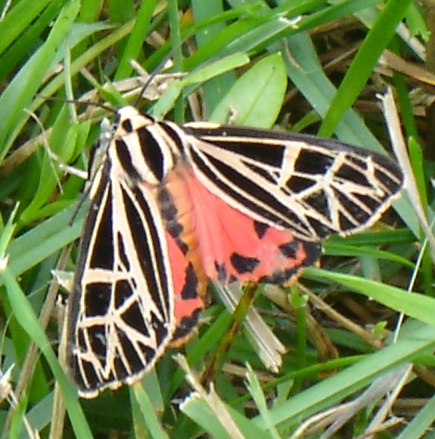
The moth I posted later that month, the Tiger Moth, Apantesis parthenice, is a little showier.

I’ve been learning a lot from trying to figure out what things are before I post them, although I’m not nearly good enough to help out with the ID request part of the site. I’ve started binders of the critters I photograph. When I get an ID, I print out information about the critter and add it, with a photo or two, to the binders. I have about 200 critters with at least a partial id, and many are identified at the species level.

Overtime, I realized that my collection of identified photos was building along the lines of True Bugs and Beetles. Although I’ve spent happy hours taking photos of bees as they feed on flowers, I haven’t spent the time to tell one bee from another.

Thistle visitor

For one thing, some of the insects that I thought were bees out in the field turned out to be, when I looked at the photographs, not bees at all, but flies.

Bee? No, Drone Fly

At this point, I have only two bees in my collection of photographs, both of them are Sweat bees: the Augochlora pura (Pure Green-Sweat bee) pictured at the top of the post, and Agapostemon virescens (BiColored Striped Sweat bee).

My bee deficiency is about to change. Yesterday I took part in the first of seven sessions of The Bee Short Course for Community Scientists: Building wild bee conservation skills together. This webinar series has been developed by the Ohio State University Department of Entomology and The Chadwick Arboretum and Learning Gardens. I connected with this effort first through an interest in The U.S. National Native Bee Monitoring Research Coordination Network (RCN). Here’s a link that describes their work: https://www.nytimes.com/2020/12/07/science/native-bees-census.html

The first session is titled “Bee Botany.” I was surprised that most of the time was devoted to flower anatomy, but I shouldn’t have been. After all, bees and flowers depend on each other for essentials of life: food and reproduction. The presenter, Randy Mitchell of the University of Akron, is an engaging speaker – even in an online session, his delight in studying the relationship between bees and flowers is obvious. He mentioned several sources of information that sounded promising. As I take a look at them, I’ll share them here.

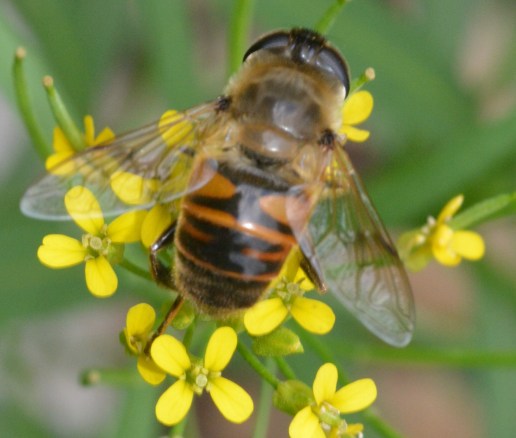
Is it a Bee or a Fly?

This winged creature appreciated the sunflowers in the garden

In North America, the word “fly” might bring to mind the peskiness of the house fly, the impressive size of the horse fly, or the bite of the deer fly. And to many of us, the answer to the question: Can you distinguish between flies and bees? would be, of course.

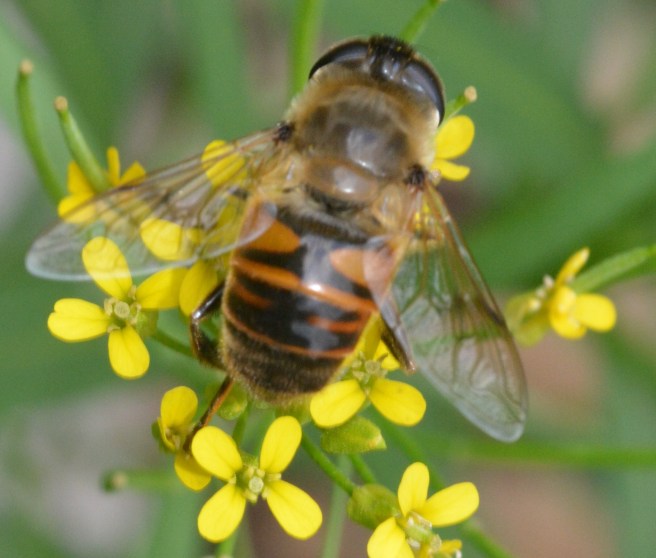
But there is an entire family of flies, Syrphidae, who make it their business to mimic bees and wasps. And they are pretty darn good at it. In my early days of photographing insects (not that long ago) I often thought I was taking pictures of a very small bee or wasp. But when I got inside and took a look at the enlarged photos on my laptop, I realized here was something distinctly not a bee or wasp. With the help of bugguide.net, I’ve been making progress in learning about the flies I share my world with. They are a fascinating addition to my life: sometimes comical looking, often quite beautiful.  

Eristalis trasversa – the Transverse Flower Fly, another view

One characteristic of flies is that they have one pair of wings. Bees and wasps have 2 pairs. Also, although we call several insects by the name ‘fly,’ with real flies (Order Diptera), the word ‘fly’ is a separate word. Crane Flies and March Flies are flies, but butterflies and dragonflies are not. Not all flies are called flies – mosquitos and midges are flies, too.

I recently discovered a very good resource with a side-by-side comparison of flies and the bees and wasps they mimic: All About Hoverflies. I’m pretty sure that based on the information on this webpage, I can identify the fly in my photo as a male. Males have bigger eyes that come close together at the top of the head.

When I started taking photos of bugs and insects, I would not have guessed that flies would become a favorite, or that I’d get pretty geeked out about being able to tell the males from the females.

UPDATE: If you’re on your way to getting geeked out about bees, here’s a short lesson in how to spot imitators: https://www.nytimes.com/interactive/2020/08/14/science/is-it-a-bee-or-something-else.html

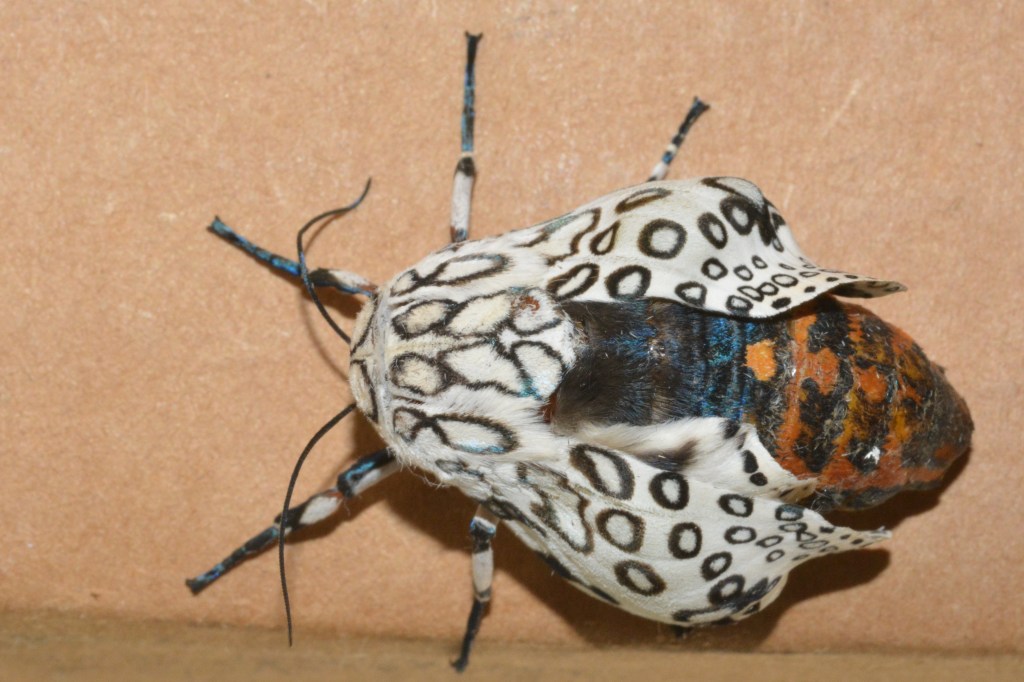
3 Stages of the Beauty of the Giant Leopard Moth

In 2015 I was living 15 miles out of town, on three acres with fields and woods on either side and woods across the street. Many of the photos I’ve posted to Bugguide.net were taken there. When we moved in 2018 to a village rental, I wondered how many insects I’d see. As it turned out, not many. The residential use of pesticides and clearing of any wild shrubby areas had done their work. Even when clover bloomed all over the lawns of the nearby college campus, there were hardly any bees foraging the nectar.

When I discovered the emerging Giant Leopard moth, Hypercompe scribonia, on a plant I’d moved indoors, it was a double pleasure – it is rare enough to witness important moments in an insect’s life, and it would especially rare in my new surroundings.

Here’s what the moth looked like when I first saw it –

Adult emerging
Giant Leopard Moth Adult emerging

Twenty minutes later the transformation was complete. These two photos are now 2 of a set of 3. I took the caterpillar’s photo on October 24, 2015. When the caterpillar is at its full length, it is a handsome black, when it curls into its protective position, the red intersegmental rings are on display.

The Giant Leopard Moth caterpillar
Giant Leopard moth caterpillar

Now we own a home in the village, and I’ll have a chance to try to establish a small oasis for insects here in our yard. In the swirl of human activity that glimmers with foolishness and sorrow, trying to take care of the pollinators and other insects in the face of all that is stacked against them seems a reasonable task. It is one that will remind me over and over that I, too, am an animal; that I have a share in their fate as surely as they have a share in mine.

The Pleasure of Photographing bugs and insects

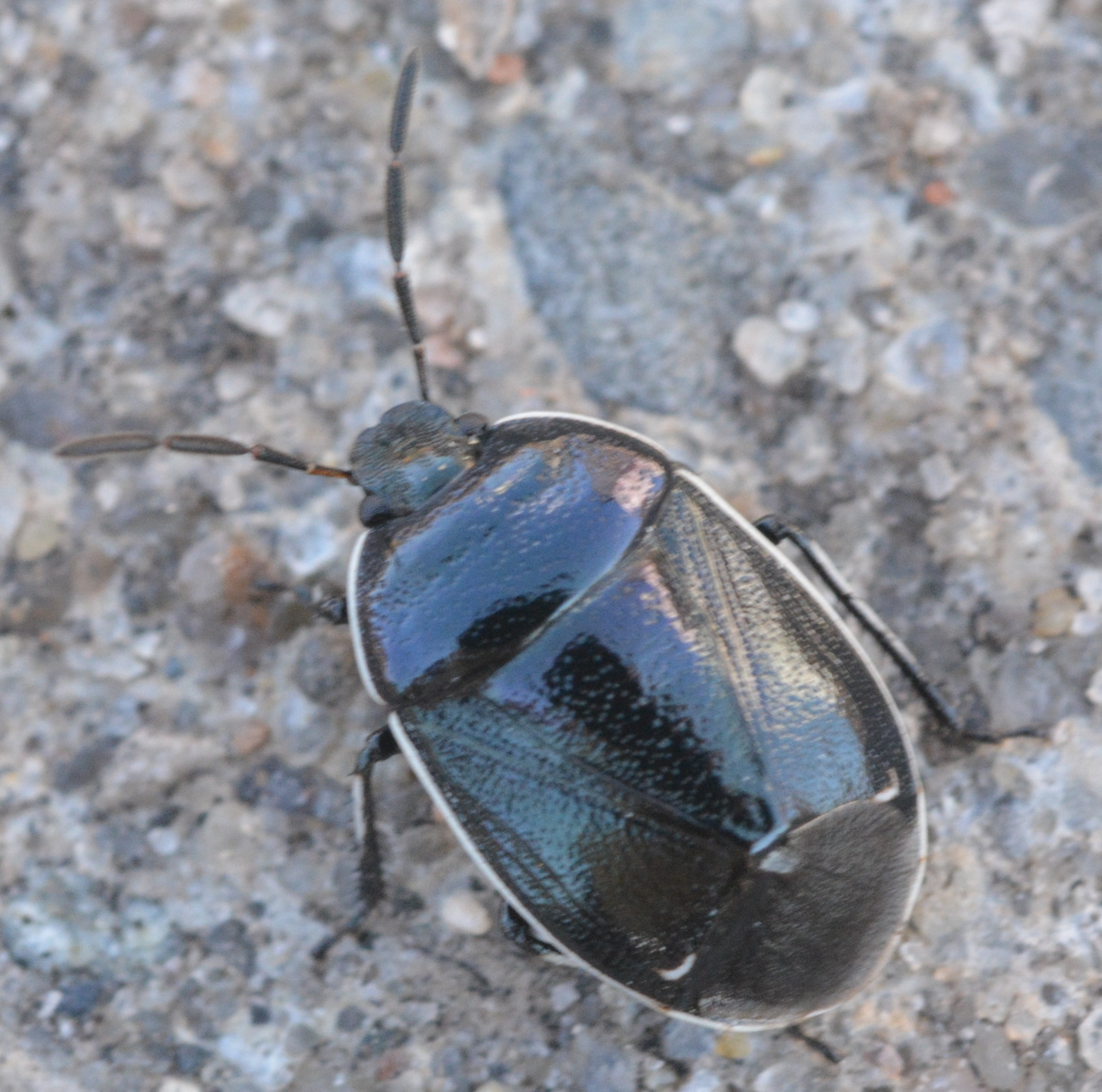
I love photographing insects and spiders and discovering details I didn’t see until I opened the photographs on my computer – the lovely striped abdomen of the Drone Fly; the butterscotch color of the Deer Fly; the slim white line that etches the outline of Sehirus cinctus, the White-margined Burrower Beetle.

drone-fly.jpg  deer-fly.jpg      white-margined-burrower-beetle.jpg

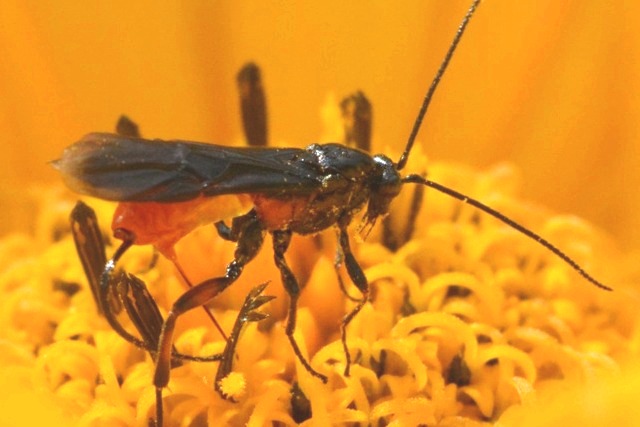
I love the sense of wonder when I realize that what I have seen and photographed is a grasshopper laying eggs, or a wasp with her long, slender ovipositor slid into a blossom’s bosom.

wasp ovitpositing

I love discovering a crab spider on the yellow petal on which I saw and photographed a Jagged Ambush Bug: in successive frames they edge closer, then edge away.

jagged-ambush-and-crab-spider-eudora-watson.jpg

I love the names of insects – the scientific names I would stumble over if I tried to say them aloud, but which somersault on my mind’s tongue with joy: Agelenopsis, Araneus trifolium, Neoscona Arabesque, Ellychnia corrusca, Reduvius personatus,  Lygaeus kalmia, Podisus placidus, Stiretrus anchorago, Herpyllus ecclesiasticus. predatory stink bug e watson

And the common names: Grass spider, Shamrock and Arabesque Orbweavers, Winter Firefly, Small Milkweed Bug, Masked Hunter, Predatory Stink Bug, Anchor Stink Bug, Eastern Parson Spider.

14 spotted ladybug e watsonI love the practicality of the names that describe their appearance: Three-lined Potato Beetle, Tortoise Beetle, Fourteen-spotted Lady, Thinlegged Wolf Spider, White Admiral, Painted Lady, Pearly-eye, Zebra Caterpillar Moth, Twice-stabbed Stink Bug.
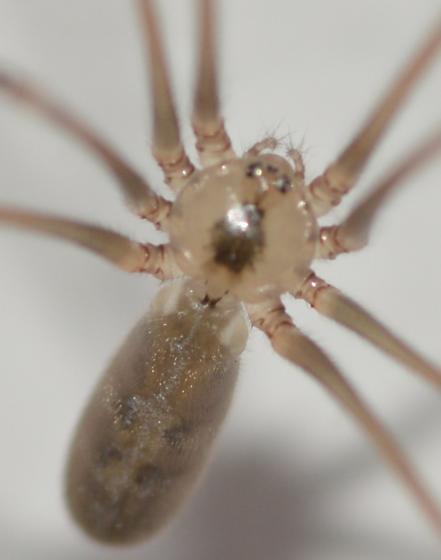
And I love the names that describe Long bodied cellar spidertheir behaviors: Tumbling Flower Beetle, Jumping Spider, Fungus-eating Lady, Cobweb Spider, Rose Chafer, Oil Blister Beetle, Sharpshooter. And the names that do both: Milkweed Longhorns, Dot-tailed Whiteface Skimmer, Four-spotted Skimmer, Longbodied Cellar Spider.

hummingbird moth_ e watson

And I love this world of wonders in which the Lady Bug is not a bug but a beetle; in which the nymph of the Masked Hunter covers itself in dust and lint and patrols our sheets and pillows for bedbugs; in which the hummingbird is,  in fact, a moth.

Goldenrod Feast

DSC_0374 painted lady not cropped

My backfield takes on a yellow hue when the Goldenrod comes into bloom, and having learned to blame the correct pollen  – ragweed – for my hay fever, I am unreserved in my welcome of it. Many others are unreserved as well. The yellow that catches my eye catches the attention of many species, and while I do the Goldenrod the good of simply leaving it alone, others do it the good of flying in for a meal and flying out with pollen they’ll spread to other Goldenrod plants.

On a sunny September day, Painted Lady Butterflies, bees, and wasps showed up to feast on the golden plumes.

Of Raspberries and Bees

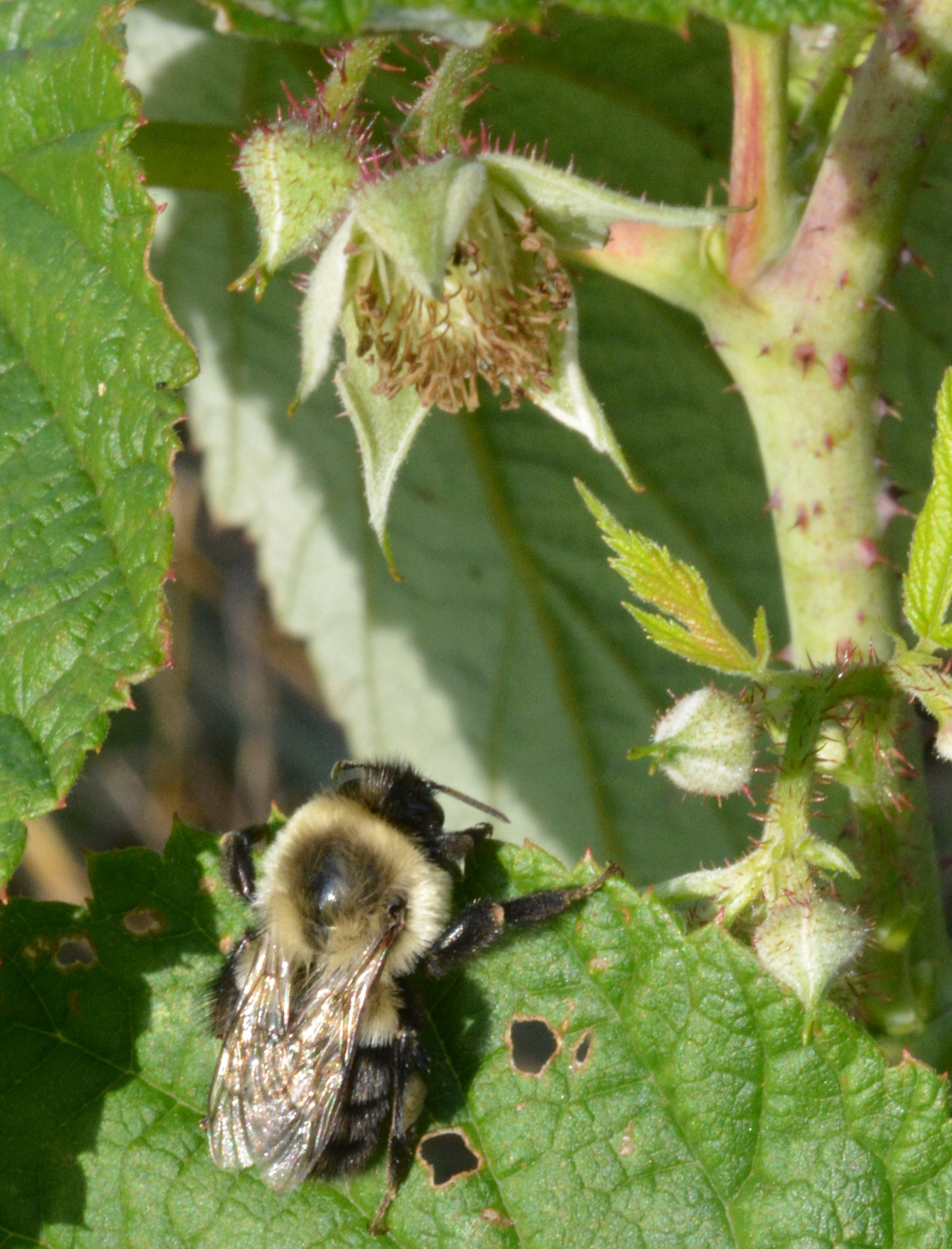
DSC_0563 Bee raspberry nice for web

These hot September days are ripening the fall-bearing raspberries. Their canes arch and nod, and many clusters of fruit are partially hidden by leaves. When I’m out picking berries, I have often held a cane at its tip to lift it up for a look underneath – checking for fruit and for bees that might be feeding there. The berry patch has been especially active with bees these sunny days, and I’ve been picking raspberries early in the morning to keep out of the bees’ way.

Today I got a late start: the sun was well up, and the bees were in full swing of feeding. I moved slowly as I picked, and often stopped to photograph the insects I saw. That unhurriedness gave me time to observe where the bees actually do settle on the plants. I learned that our foraging territories don’t overlap at all – they are after a far different harvest. I am looking for the ripest raspberries, they are only interested in the earliest stages of that fruit, just when the blossom has started to turn in on itself in preparation of creating a berry. In the company of these bees, a few hours later in the day makes no difference: there is nothing to fear.

Early morning raspberry harvest

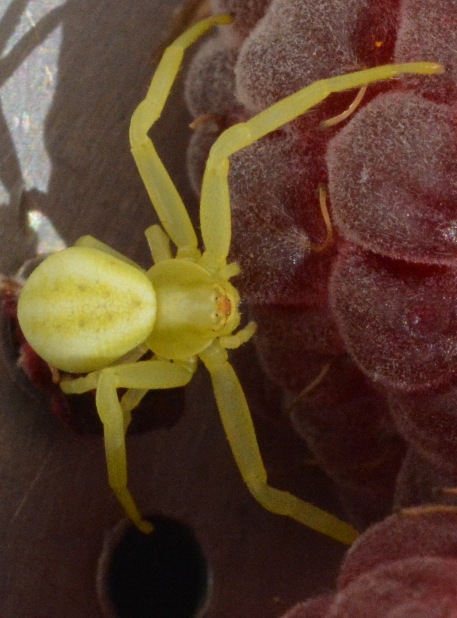
I lifted a nodding cane of raspberry to check for fruit, and found as well a crab spider crouched there, its light-green, almost translucent coloring a perfect complement to the red of the berries. The spider drew back into the berry, and I let the cane nod back down.

taken october 4 50 degrees 076spider eyes

Last year, to the week, I didn’t see the spider until I had the fruit inside. I took her photograph and released her back into the berry patch.