Leave the Leaves in the Spring, too

What do the Swallowtail Butterflies, Bumble Bee Queens, and Fireflies have in common? They all depend on leaf litter as their home and protection during our winter months. For the last ten years there has been a growing movement to get people to leave the leaves in their yard in the fall to benefit wildlife. But the reasons are just as compelling to put off removing leaves in the spring.

As long ago as 2015, the National Wildlife Federation was advocating for leaving fall leaves, and the Xerces Society and others have taken up the call. And, somewhere along the line October was declared as “Leave the Leaves” month. To the extent that folks followed that advice, all sorts of critters have benefited. The bumble bee queens that burrow shallowly in the soil under a protecting layer of leaves, the adult Mourning Cloak Butterflies that tucked into the leaves, and the stick insect eggs that dropped from the tree or shrub on to the leaf litter all had better chances of surviving the winter.  

But for over ten years, a crucial element in backyard habitat protection has been ignored. Simply put, the leaf litter layer is like Nature’s winter coat for those creatures. And just like we don’t put our own winter coats away when we get the first sporadic, warm, sunny days, if we want to protect pollinating insects and those that will feed the birds who depend on them for food to raise their young, we should leave their winter coat in place, too. The temperatures will dip again and the insects will need the protection.  

It can be satisfying to clean up the yard and fill leaf bags with the refuse, and I’ve certainly filled my share of them, but I’ve learned the bags contain not only leaves and twigs, but insects at all stages of life: egg, larva, pupa, and adult. Many of them are small and even if visible, not recognizable because they look starkly different than the adults. And some are disguised, like the Swallowtail Butterfly pupae that mimics fallen leaves.

I understand the urge to do something, anything, to make the early spring yard look better. But if you’re hoping to support pollinators, and the birds who rely on insects to raise their young, April is too soon. Clear walkways to keep them safe, of course, but leaving the leaves this spring will help out not just the birds and the bees, but the butterflies, moths, and fireflies.

On the Path to Learning about Wild Bees

I’ve been interested in insects for a long time. As a kid I worried over the ladybugs in the attic and whether they’d survive the winter up there. I rescued as many bugs as I could from the surface of our swimming pool. I dropped crumbs for ants and watched them investigate and haul away the treasure. But it wasn’t until years later, when I took a photo of a beetle that was stranded at the bottom of an empty water glass, that I began to get hooked on figuring out exactly what I was looking at. I had some insect guides on hand – more because I love guidebooks than because I loved insects, I admit – and took a look.

I discovered that what was circling the bottom of the glass was an America Carrion beetle, Necrophila americana. These beetles actually bury the small carcasses they come across for food for their offspring. When I paired the attractive beetle with its name and its burial and parental skills, I was hooked. I bought more guides and worked along on IDs in an entirely haphazard way. But in 2013, I discovered the Iowa State University site, BugGuide.Net. and posted my first photo to their ID Request page. That first posting of a caterpillar, the Dagger Moth Acronicta americana, looks pretty humble, but it was exciting for me.

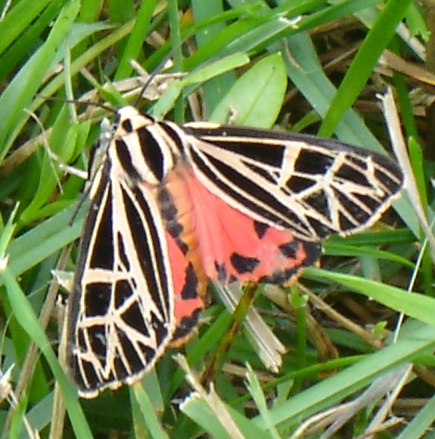
The moth I posted later that month, the Tiger Moth, Apantesis parthenice, is a little showier.

I’ve been learning a lot from trying to figure out what things are before I post them, although I’m not nearly good enough to help out with the ID request part of the site. I’ve started binders of the critters I photograph. When I get an ID, I print out information about the critter and add it, with a photo or two, to the binders. I have about 200 critters with at least a partial id, and many are identified at the species level.

Overtime, I realized that my collection of identified photos was building along the lines of True Bugs and Beetles. Although I’ve spent happy hours taking photos of bees as they feed on flowers, I haven’t spent the time to tell one bee from another.

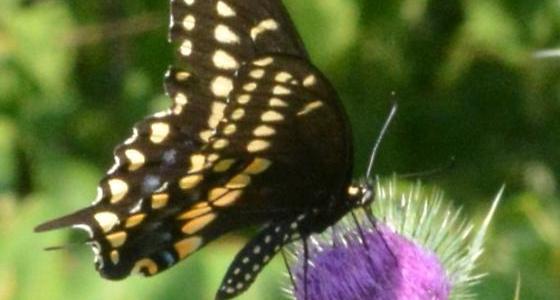
Thistle visitor

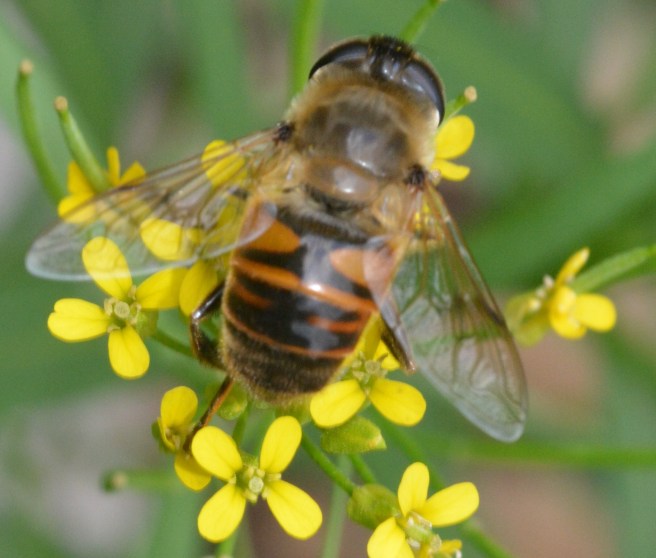
For one thing, some of the insects that I thought were bees out in the field turned out to be, when I looked at the photographs, not bees at all, but flies.

Bee? No, Drone Fly

At this point, I have only two bees in my collection of photographs, both of them are Sweat bees: the Augochlora pura (Pure Green-Sweat bee) pictured at the top of the post, and Agapostemon virescens (BiColored Striped Sweat bee).

My bee deficiency is about to change. Yesterday I took part in the first of seven sessions of The Bee Short Course for Community Scientists: Building wild bee conservation skills together. This webinar series has been developed by the Ohio State University Department of Entomology and The Chadwick Arboretum and Learning Gardens. I connected with this effort first through an interest in The U.S. National Native Bee Monitoring Research Coordination Network (RCN). Here’s a link that describes their work: https://www.nytimes.com/2020/12/07/science/native-bees-census.html

The first session is titled “Bee Botany.” I was surprised that most of the time was devoted to flower anatomy, but I shouldn’t have been. After all, bees and flowers depend on each other for essentials of life: food and reproduction. The presenter, Randy Mitchell of the University of Akron, is an engaging speaker – even in an online session, his delight in studying the relationship between bees and flowers is obvious. He mentioned several sources of information that sounded promising. As I take a look at them, I’ll share them here.